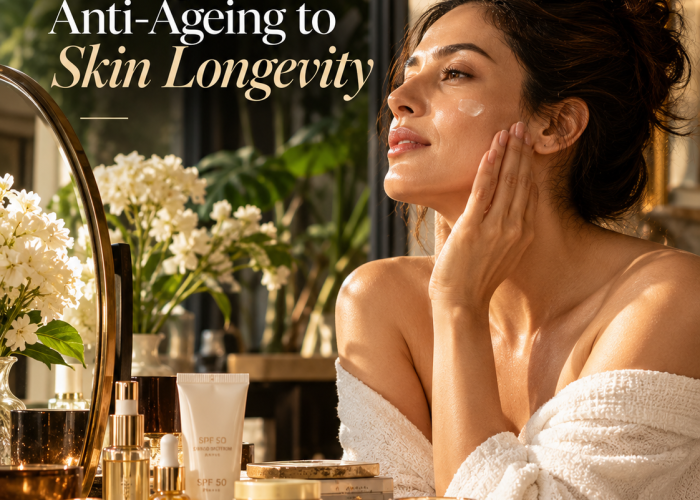
The New Beauty Product Is Half Skincare, Half Makeup: Why Hybrid Beauty Is Taking Over
GNG BEAUTY | PRODUCT INTELLIGENCE | BEAUTY TRENDS 2026
The beauty routine is getting a rethink. Consumers are increasingly looking for complexion products that do more than simply cover imperfections. They want comfortable textures, natural-looking finishes, easy application and formulations that fit into a skincare-conscious routine.
The result? A growing category of hybrid beauty products that sit somewhere between skincare and makeup.
Think tinted moisturisers, serum foundations, SPF lip products, skin tints, complexion balms and makeup infused with skincare-inspired ingredients. The objective is to achieve a polished appearance without feeling as though the face is covered in layers of product.
One of the latest Indian beauty launches bringing this conversation into focus isThe New Beauty Product Is Half Skincare, Half Makeup: Why Hybrid Beauty Is Taking Over
GNG BEAUTY | PRODUCT INTELLIGENCE | BEAUTY TRENDS 2026
The beauty routine is getting a rethink. Consumers are increasingly looking for complexion products that do more than simply cover imperfections. They want comfortable textures, natural-looking finishes, easy application and formulations that fit into a skincare-conscious routine.
The result? A growing category of hybrid beauty products that sit somewhere between skincare and makeup.
Think tinted moisturisers, serum foundations, SPF lip products, skin tints, complexion balms and makeup infused with skincare-inspired ingredients. The objective is to achieve a polished appearance without feeling as though the face is covered in layers of product.
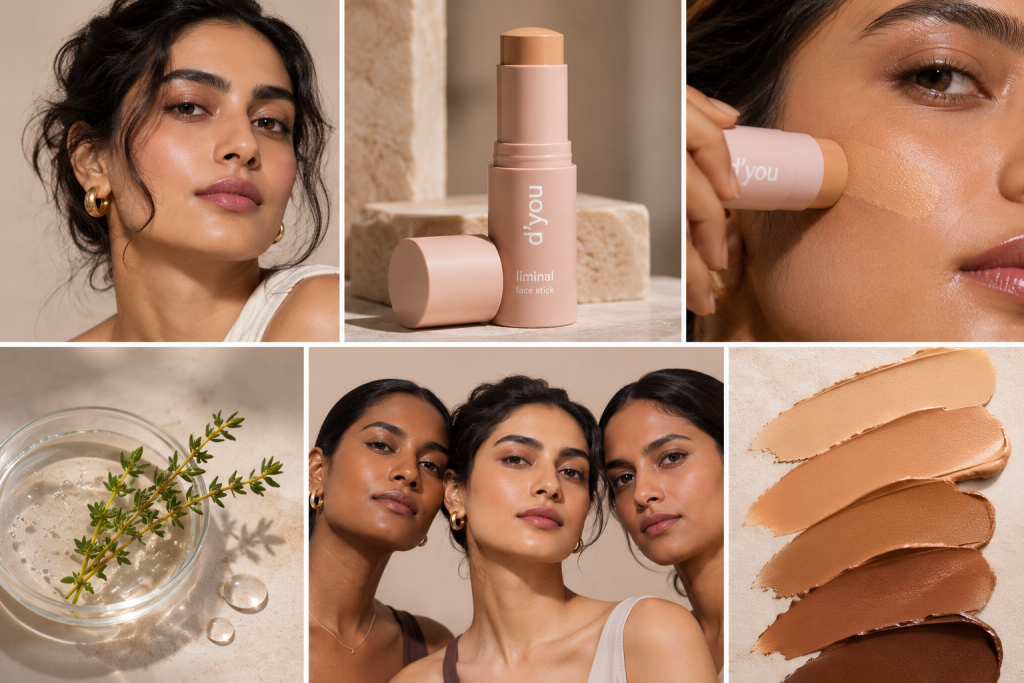
One of the latest Indian beauty launches bringing this conversation into focus is d’you’s liminal face stick, introduced under its new colour cosmetics category, d’you colour.
But this launch also raises a bigger question: when a makeup product contains skincare ingredients, how much skincare benefit should consumers actually expect?
The Rise of Skin-First Makeup
Traditional complexion makeup was largely associated with coverage, correction and transformation. Foundations were designed to create a more uniform canvas, while primers and powders helped control texture and finish.
Today’s complexion conversation is different.
The preference for skin-like finishes, lightweight textures and flexible coverage has encouraged brands to rethink how foundation and complexion products should feel.
Recent beauty coverage by Vogue has also highlighted this shift towards lightweight, buildable complexion formulas that balance coverage with a more natural-looking finish.
Consumers are increasingly interested in products that can even out the complexion while allowing natural skin texture to remain visible.
This is where hybrid beauty enters the picture.
Rather than treating skincare and makeup as completely separate categories, brands are exploring products that combine cosmetic performance with skincare-inspired formulation choices.
The important distinction is that a hybrid product still needs to perform its primary function. A foundation must provide the coverage and finish it promises, regardless of the ingredients highlighted in its marketing.
d’you Liminal Face Stick: A Skincare Brand Steps Into Makeup
Indian skincare brand d’you, founded by Shamika Haldipurkar in 2020, has expanded into colour cosmetics with the introduction of d’you colour.
Its first launch, the liminal face stick, is designed around the idea of low-visibility makeup: complexion enhancement that looks natural rather than heavily applied.
Developed over three years, the product offers medium, buildable coverage in a buttery stick format. It is designed to blend into the skin and settle into a natural satin finish.
The product comes in 17 shades developed around Indian skin tones and undertones.
Here are the key details:
- Brand: d’you
- Product: liminal face stick
- Category: Complexion makeup
- Coverage: Medium and buildable
- Finish: Natural satin
- Shade range: 17 shades
- Size: 8g
- Price: ₹3,400
- Availability: d’you’s official website, Nykaa, Amazon and Tira
The formula also features 1% upcycled thyme extract, which the brand describes as a clarifying and balancing ingredient.
However, d’you itself clarifies that liminal is a makeup product, not an acne or redness treatment. The brand does not claim that it is clinically proven to reduce acne or redness.
That distinction matters when evaluating skincare-inspired makeup.
What Makes a Product Half Skincare, Half Makeup?
The term hybrid beauty can cover several different types of products. Not all of them offer the same benefits.
1. Skincare-inspired complexion products
These include foundations, skin tints and complexion sticks formulated with ingredients commonly associated with skincare.
The primary function remains cosmetic coverage. Ingredients may support the product’s formulation or offer additional cosmetic benefits, but their presence alone does not establish a treatment effect.
2. Tinted skincare
Tinted moisturisers and tinted sunscreens combine a complexion-enhancing effect with skincare or sun-protection functions.
For SPF products, consumers should still follow the product’s labelled application instructions and use sufficient sunscreen. A small amount of tinted makeup should not be assumed to provide adequate sun protection.
3. Makeup with moisturising ingredients
Lip products, foundations and concealers may contain ingredients such as hyaluronic acid, glycerin or emollients to support hydration, comfort and product texture.
These ingredients can contribute to how a product feels and performs, but they do not automatically make it equivalent to a dedicated moisturiser or treatment.
4. Multi-purpose beauty products
Blush sticks, tinted balms and complexion sticks are designed to simplify application and reduce the number of separate products needed.
Their appeal is practical: fewer steps, portable packaging and versatile application.
The Ingredient Question: Marketing Claim or Proven Skincare Benefit?
This is where beauty consumers need to become more discerning.
A product can contain an ingredient associated with skincare without being clinically proven to deliver the same results as a dedicated skincare treatment.
Consider the difference:
| Marketing language | What consumers should establish |
|---|---|
| Contains calming ingredients | Which ingredients, at what concentration and for what purpose? |
| Supports skin health | What specific benefit has been demonstrated? |
| Helps reduce redness | Is there appropriate testing on the finished product? |
| Non-comedogenic | What testing supports the claim? |
| Dermatologically tested | What testing was conducted and what did it establish? |
| Contains SPF | What is the tested SPF rating and how should it be applied? |
For example, d’you’s liminal face stick contains 1% upcycled thyme extract. The brand discusses the ingredient’s potential skin-calming and balancing properties.
However, the brand also explicitly states that the product is not an acne or redness treatment.
This is an important example of why ingredient presence and clinical performance should not be treated as interchangeable.
A clinical claim should be supported by suitable testing on the finished product, not simply by research discussing an individual ingredient.
Does the d’you Liminal Face Stick Replace Foundation?
Not exactly. It is itself a complexion product, designed to function as a foundation-style stick with medium, buildable coverage.
Its main point of difference is its application format and intended finish.
The stick can be applied directly to the face and blended using fingers or a brush. It can be used across the face or selectively on areas where additional coverage is wanted.
According to the brand, the product is designed to provide a natural satin finish rather than an extremely matte or dewy appearance.
Its 17-shade range is also worth noting in the Indian beauty market, where accurate depth and undertone matching remain important considerations for complexion products.
At ₹3,400, however, it sits firmly within the premium makeup category. Whether the price is justified will depend on the individual consumer’s experience with the shade match, texture, coverage, comfort and wear.
Who Is This Kind of Makeup For?
Hybrid complexion products may appeal to consumers who:
- Prefer natural-looking makeup over full-coverage foundations.
- Want a quicker everyday complexion routine.
- Like buildable coverage rather than a heavy base.
- Prefer portable products for travel and touch-ups.
- Are interested in makeup that complements a skincare-conscious routine.
However, they are not automatically suitable for every skin type.
People with sensitive or acne-prone skin should review the complete ingredient list, patch test new products and pay attention to individual reactions.
The d’you website also advises that liminal should not be treated as a sunscreen and recommends applying dedicated sun protection before makeup.
The Bigger Beauty Trend: Fewer Steps, Better Formulations
The growth of hybrid beauty reflects a wider change in how consumers approach their routines.
The appeal is not necessarily about owning fewer products at any cost. It is about making each product more useful.
A complexion stick that can provide coverage exactly where needed, a tinted SPF that offers colour and sun protection, or a lip product that combines colour with conditioning benefits can make everyday routines more efficient.
For beauty brands, this opens up a valuable opportunity.
Skincare companies can use their formulation expertise to enter makeup. Makeup brands can strengthen their products through more thoughtful formulations. Retailers can create new product categories around skin-first complexion and multi-purpose beauty.
But the competition will increasingly depend on performance.
Consumers will want to know whether the product blends well, whether the shade range works, whether it lasts through the day and whether its skincare claims are meaningful.
A long ingredient list cannot compensate for poor makeup performance.
The GNG Beauty Checklist: Before Buying Hybrid Makeup
Before investing in a skincare-meets-makeup product, ask five questions:
- What is its primary purpose? Is it a foundation, moisturiser, sunscreen or treatment?
- What coverage and finish does it actually offer? Look beyond promotional descriptions.
- Are the skincare claims substantiated? Look for evidence relating to the finished product.
- Does the shade range suit your complexion? Check depth and undertone, not just the shade number.
- Does it fit your existing routine? It should complement your skincare and sunscreen rather than replace essential steps without evidence.
The GNG Take
The next chapter of beauty is becoming less about choosing between skincare and makeup and more about how intelligently the two categories work together.
d’you’s entry into colour cosmetics with the liminal face stick is an interesting development because it brings a skincare-led Indian beauty brand into the complexion category with a distinctly natural-looking makeup proposition.
But the bigger story is the consumer expectation behind it.
People want products that feel comfortable, perform well, simplify their routines and offer more than one reason to buy.
The opportunity for beauty brands is to deliver that combination without overpromising what their formulas can achieve.
The future of hybrid beauty will not be decided by how many skincare ingredients appear on a makeup label. It will be decided by whether the product actually delivers on both its promises.
GNG BEAUTY | Decoding the products, ingredients and innovations shaping the beauty industry.
SEO and publishing details
SEO title: Hybrid Beauty 2026: Why Skincare and Makeup Are Coming Together
Meta description: From d’you’s liminal face stick to skin-first complexion products, discover why hybrid beauty is changing makeup routines and what skincare claims consumers should understand.
Primary keyword: Hybrid beauty products
Secondary keywords:
- d’you liminal face stick
- d’you colour makeup
- skincare infused makeup
- skin-like foundation India
- makeup trends 2026
URL slug: hybrid-beauty-skincare-makeup-dyou-liminal-face-stick
Suggested category: Beauty → Product Intelligence
Suggested tags: d’you, Liminal Face Stick, Hybrid Beauty, Skin-First Makeup, Indian Beauty Brands, Foundation Trends, Beauty Innovation, introduced under its new colour cosmetics category, d’you colour.
But this launch also raises a bigger question: when a makeup product contains skincare ingredients, how much skincare benefit should consumers actually expect?
The Rise of Skin-First Makeup
Traditional complexion makeup was largely associated with coverage, correction and transformation. Foundations were designed to create a more uniform canvas, while primers and powders helped control texture and finish.
Today’s complexion conversation is different.
The preference for skin-like finishes, lightweight textures and flexible coverage has encouraged brands to rethink how foundation and complexion products should feel.
Recent beauty coverage by Vogue has also highlighted this shift towards lightweight, buildable complexion formulas that balance coverage with a more natural-looking finish.
Consumers are increasingly interested in products that can even out the complexion while allowing natural skin texture to remain visible.
This is where hybrid beauty enters the picture.
Rather than treating skincare and makeup as completely separate categories, brands are exploring products that combine cosmetic performance with skincare-inspired formulation choices.
The important distinction is that a hybrid product still needs to perform its primary function. A foundation must provide the coverage and finish it promises, regardless of the ingredients highlighted in its marketing.
d’you Liminal Face Stick: A Skincare Brand Steps Into Makeup
Indian skincare brand d’you, founded by Shamika Haldipurkar in 2020, has expanded into colour cosmetics with the introduction of d’you colour.
Its first launch, the liminal face stick, is designed around the idea of low-visibility makeup: complexion enhancement that looks natural rather than heavily applied.
Developed over three years, the product offers medium, buildable coverage in a buttery stick format. It is designed to blend into the skin and settle into a natural satin finish.
The product comes in 17 shades developed around Indian skin tones and undertones.
Here are the key details:
- Brand: d’you
- Product: liminal face stick
- Category: Complexion makeup
- Coverage: Medium and buildable
- Finish: Natural satin
- Shade range: 17 shades
- Size: 8g
- Price: ₹3,400
- Availability: d’you’s official website, Nykaa, Amazon and Tira
The formula also features 1% upcycled thyme extract, which the brand describes as a clarifying and balancing ingredient.
However, d’you itself clarifies that liminal is a makeup product, not an acne or redness treatment. The brand does not claim that it is clinically proven to reduce acne or redness.
That distinction matters when evaluating skincare-inspired makeup.
What Makes a Product Half Skincare, Half Makeup?
The term hybrid beauty can cover several different types of products. Not all of them offer the same benefits.
1. Skincare-inspired complexion products
These include foundations, skin tints and complexion sticks formulated with ingredients commonly associated with skincare.
The primary function remains cosmetic coverage. Ingredients may support the product’s formulation or offer additional cosmetic benefits, but their presence alone does not establish a treatment effect.
2. Tinted skincare
Tinted moisturisers and tinted sunscreens combine a complexion-enhancing effect with skincare or sun-protection functions.
For SPF products, consumers should still follow the product’s labelled application instructions and use sufficient sunscreen. A small amount of tinted makeup should not be assumed to provide adequate sun protection.
3. Makeup with moisturising ingredients
Lip products, foundations and concealers may contain ingredients such as hyaluronic acid, glycerin or emollients to support hydration, comfort and product texture.
These ingredients can contribute to how a product feels and performs, but they do not automatically make it equivalent to a dedicated moisturiser or treatment.
4. Multi-purpose beauty products
Blush sticks, tinted balms and complexion sticks are designed to simplify application and reduce the number of separate products needed.
Their appeal is practical: fewer steps, portable packaging and versatile application.
The Ingredient Question: Marketing Claim or Proven Skincare Benefit?
This is where beauty consumers need to become more discerning.
A product can contain an ingredient associated with skincare without being clinically proven to deliver the same results as a dedicated skincare treatment.
Consider the difference:
| Marketing language | What consumers should establish |
|---|---|
| Contains calming ingredients | Which ingredients, at what concentration and for what purpose? |
| Supports skin health | What specific benefit has been demonstrated? |
| Helps reduce redness | Is there appropriate testing on the finished product? |
| Non-comedogenic | What testing supports the claim? |
| Dermatologically tested | What testing was conducted and what did it establish? |
| Contains SPF | What is the tested SPF rating and how should it be applied? |
For example, d’you’s liminal face stick contains 1% upcycled thyme extract. The brand discusses the ingredient’s potential skin-calming and balancing properties.
However, the brand also explicitly states that the product is not an acne or redness treatment.
This is an important example of why ingredient presence and clinical performance should not be treated as interchangeable.
A clinical claim should be supported by suitable testing on the finished product, not simply by research discussing an individual ingredient.
Does the d’you Liminal Face Stick Replace Foundation?
Not exactly. It is itself a complexion product, designed to function as a foundation-style stick with medium, buildable coverage.
Its main point of difference is its application format and intended finish.
The stick can be applied directly to the face and blended using fingers or a brush. It can be used across the face or selectively on areas where additional coverage is wanted.
According to the brand, the product is designed to provide a natural satin finish rather than an extremely matte or dewy appearance.
Its 17-shade range is also worth noting in the Indian beauty market, where accurate depth and undertone matching remain important considerations for complexion products.
At ₹3,400, however, it sits firmly within the premium makeup category. Whether the price is justified will depend on the individual consumer’s experience with the shade match, texture, coverage, comfort and wear.
Who Is This Kind of Makeup For?
Hybrid complexion products may appeal to consumers who:
- Prefer natural-looking makeup over full-coverage foundations.
- Want a quicker everyday complexion routine.
- Like buildable coverage rather than a heavy base.
- Prefer portable products for travel and touch-ups.
- Are interested in makeup that complements a skincare-conscious routine.
However, they are not automatically suitable for every skin type.
People with sensitive or acne-prone skin should review the complete ingredient list, patch test new products and pay attention to individual reactions.
The d’you website also advises that liminal should not be treated as a sunscreen and recommends applying dedicated sun protection before makeup.
The Bigger Beauty Trend: Fewer Steps, Better Formulations
The growth of hybrid beauty reflects a wider change in how consumers approach their routines.
The appeal is not necessarily about owning fewer products at any cost. It is about making each product more useful.
A complexion stick that can provide coverage exactly where needed, a tinted SPF that offers colour and sun protection, or a lip product that combines colour with conditioning benefits can make everyday routines more efficient.
For beauty brands, this opens up a valuable opportunity.
Skincare companies can use their formulation expertise to enter makeup. Makeup brands can strengthen their products through more thoughtful formulations. Retailers can create new product categories around skin-first complexion and multi-purpose beauty.
But the competition will increasingly depend on performance.
Consumers will want to know whether the product blends well, whether the shade range works, whether it lasts through the day and whether its skincare claims are meaningful.
A long ingredient list cannot compensate for poor makeup performance.
The GNG Beauty Checklist: Before Buying Hybrid Makeup
Before investing in a skincare-meets-makeup product, ask five questions:
- What is its primary purpose? Is it a foundation, moisturiser, sunscreen or treatment?
- What coverage and finish does it actually offer? Look beyond promotional descriptions.
- Are the skincare claims substantiated? Look for evidence relating to the finished product.
- Does the shade range suit your complexion? Check depth and undertone, not just the shade number.
- Does it fit your existing routine? It should complement your skincare and sunscreen rather than replace essential steps without evidence.
The GNG Take
The next chapter of beauty is becoming less about choosing between skincare and makeup and more about how intelligently the two categories work together.
d’you’s entry into colour cosmetics with the liminal face stick is an interesting development because it brings a skincare-led Indian beauty brand into the complexion category with a distinctly natural-looking makeup proposition.
But the bigger story is the consumer expectation behind it.
People want products that feel comfortable, perform well, simplify their routines and offer more than one reason to buy.
The opportunity for beauty brands is to deliver that combination without overpromising what their formulas can achieve.
The future of hybrid beauty will not be decided by how many skincare ingredients appear on a makeup label. It will be decided by whether the product actually delivers on both its promises.
GNG BEAUTY | Decoding the products, ingredients and innovations shaping the beauty industry.
Hybrid Beauty 2026: Why Skincare and Makeup Are Coming Together
Meta description: From d’you’s liminal face stick to skin-first complexion products, discover why hybrid beauty is changing makeup routines and what skincare claims consumers should understand.
Primary keyword: Hybrid beauty products
Secondary keywords:
- d’you liminal face stick
- d’you colour makeup
- skincare infused makeup
- skin-like foundation India
- makeup trends 2026
Suggested tags: d’you, Liminal Face Stick, Hybrid Beauty, Skin-First Makeup, Indian Beauty Brands, Foundation Trends, Beauty Innovation